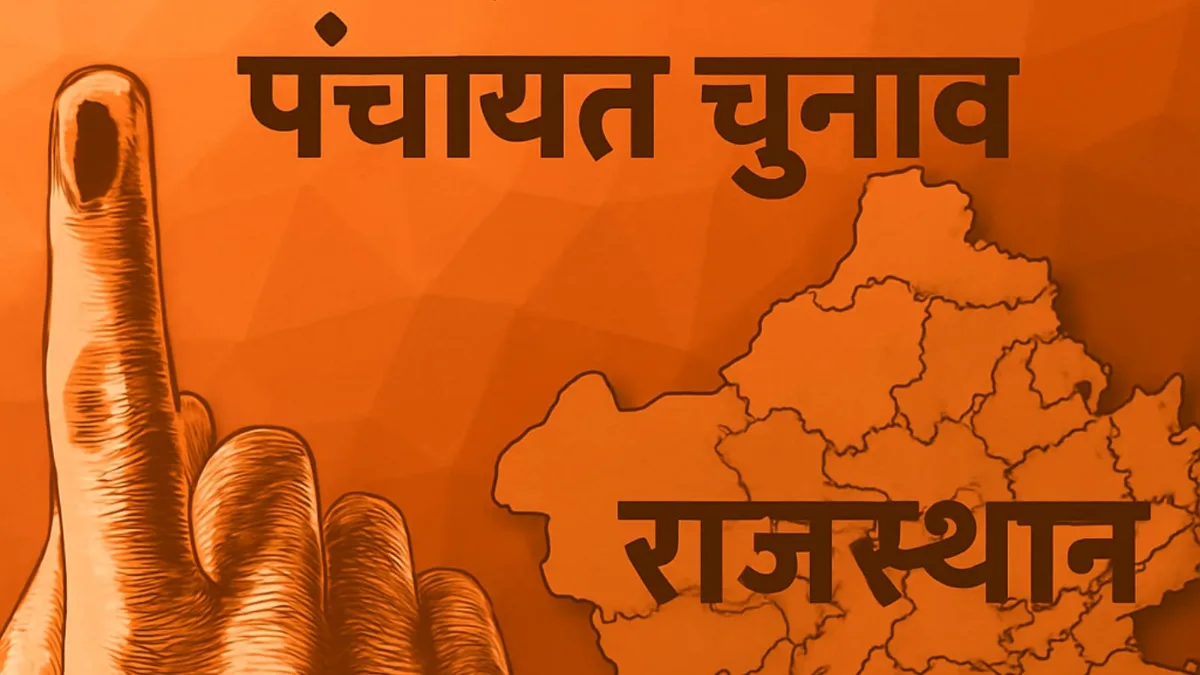
The persistent delay in local body and Panchayat elections in Rajasthan has now become a matter of serious constitutional debate. The tenure of most municipalities and municipal bodies in the state has expired, and administrative officials are being appointed as administrators. Sarpanches have been given temporary responsibilities in Gram Panchayats, while officials are also managing the Panchayat Samitis and Zila Parishads.
This situation has raised questions about the democratic process—is running local administration without an elected government in accordance with the spirit of the Constitution?
Supreme Court's clear stand
The Supreme Court of India has already made it clear that it is mandatory to conduct local body elections on time.
Specifically, in the case of “Suresh Mahajan vs. Madhya Pradesh Government”, the court held that elections cannot be stopped even if the OBC Commission report is pending.
Furthermore, in the judgment “Kishansingh Tomar vs Municipal Corporation of Ahmedabad (2006)”, the court had clearly stated that:
The government's delay cannot be made a basis for postponing the elections.
The State Election Commission should exercise its powers independently.
What does the Constitution say?
Under the Constitution:
Article 243K (Panchayats)
Article 243ZA (municipal bodies)
According to them, the State Election Commission is an independent constitutional body, which has the right to conduct elections, fix the date and conduct the entire process.
On this basis, the question arises as to:
When the government is delaying, can the Commission itself take the initiative to conduct the elections?
Ground reality: Where is the process stuck?
While the legal position is clear, several practical hurdles arise:
Ward delimitation pending in municipal bodies
Reservation process incomplete
OBC Commission report is yet to come
Due to the state government having control over these processes, there is a delay in announcing the election schedule.
High Court's strictness and then relief
A single bench of the Rajasthan High Court had clearly stated on September 20, 2025 that:
The Election Commission cannot turn a blind eye to the postponement of elections.
He has to play an active role in maintaining the democratic system.
Although the division bench later stayed the order, it also gave the following directions:
Complete delimitation by December 31, 2025
Hold elections by April 15, 2026
These instructions have also been upheld by the Supreme Court.
The matter rests with the OBC Commission
The OBC reservation report has become the biggest hurdle in the civic and panchayat elections.
The tenure of the Commission is till 31 March 2026.
Mismatches have been found in the data of around 400 Gram Panchayats.
The Commission has written a letter to the government clarifying the situation.
Now the probability is that:
A re-survey should be conducted
But it's bound to take time
In such a situation, the question has become more serious whether the elections will be postponed again or the Commission will conduct the elections without the report?
Big question on democracy
The current situation in Rajasthan indicates that:
Instead of representatives of the people, officials are running the government.
The election process is constantly being postponed.
There is a conflict between the constitutional provisions and the actual situation.
Now the focus is on:
Will the State Election Commission exercise its powers?
Or will the elections be further postponed waiting for the OBC report?
Municipal and Panchayat elections in Rajasthan are no longer merely an administrative issue, but have become a test of constitutional responsibility and the democratic system . If elections are not held on time despite clear Supreme Court directives, it could lead to major legal and political controversy in the future.