Pipalantri, a small village in Rajasthan's Rajsamand district, has become an inspiring example not only for the country but for the world. Here, a unique tradition has simultaneously strengthened social thinking, the environment, and the future of daughters.
This initiative was started by Shyam Sundar Paliwal, the former village sarpanch, in memory of his daughter Kiran. He transformed the pain of losing his daughter into a positive change for society—and this gave birth to a tradition that has now become a movement.
111 trees on the birth of a daughter: A green celebration of happiness
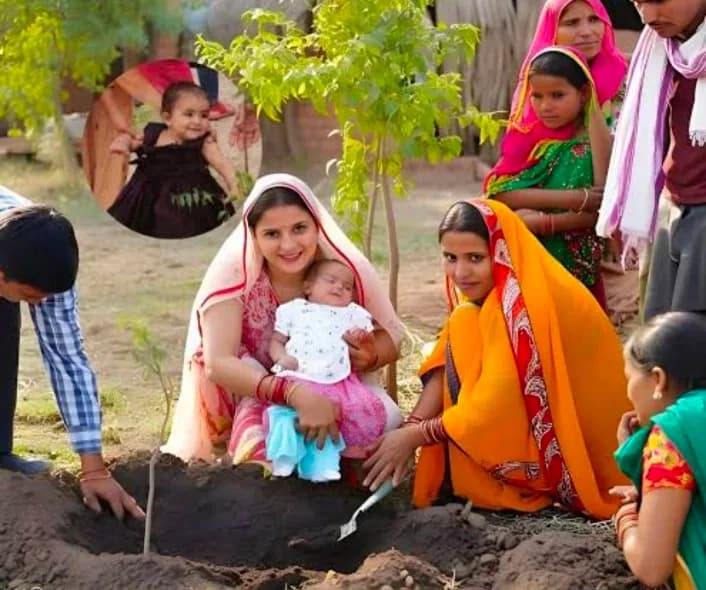
In Pipalantri, whenever a daughter is born, the entire village plants 111 trees. This isn't just a ritual, but a pledge—to protect both daughters and nature.
These plants mainly include medicinal and useful plants like Aloe Vera, Neem and Amla, which also become a source of income over time.
A unique model for the safety and economic empowerment of daughters
This initiative isn't limited to planting trees. The villagers also collectively make a fixed deposit of approximately ₹31,000 in the name of the newborn daughter. The family is also asked to promise to provide the daughter with a good education and to avoid social evils like child marriage.
This system guarantees economic security and a better future for daughters.
Relationship with trees: Daughters tie Rakhi on Rakshabandhan
The daughters of Pipalantri treat the trees they plant not just as trees, but as their brothers, tying a Rakhi to them every year on Raksha Bandhan. This tradition reflects an emotional connection with nature and strengthens the spirit of conservation.
New direction for both environment and society
The impact of this initiative is clearly visible today.
Thousands of trees have been planted in the village
There has been a steady increase in greenery
The water level has improved
And most importantly—the attitude towards daughters has completely changed.
Whereas earlier daughters were considered a burden, now their birth is celebrated like a festival.
The Eco-Feminist Model: Where Greenery and Respect for Daughters Go Together
Piplantri is today known as an "eco-feminist" model—where environmental protection and women's empowerment go hand in hand. This model has become a model for other parts of the country.
This initiative by Pipalantri village proves that if society is determined, even small beginnings can lead to significant change. By combining these two messages—Save the Daughter and Save the Environment—this village has shown a new path.
👉 This is not just the story of one village, but an inspiration for the entire country.