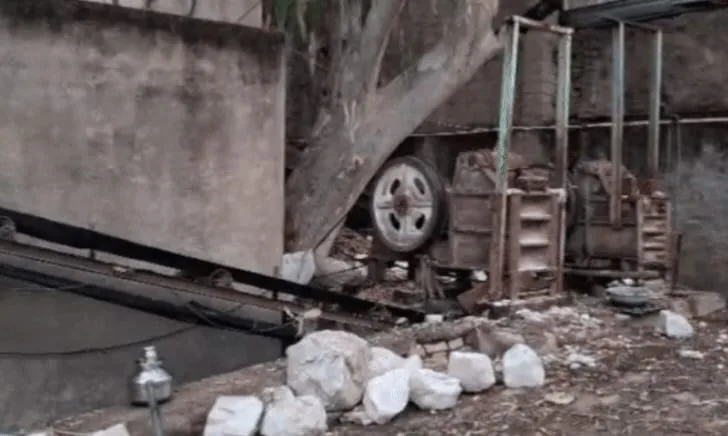
Rajasthan's mineral industry is currently under severe economic pressure. The impact of the ongoing international tensions between the US, Israel, and Iran is now clearly visible in the state's industries. Mineral-based small and medium-sized industries, in particular, are facing significant losses.
Industry stalled due to falling demand
The ceramic industry in Morbi, Gujarat, which is the largest consumer of Rajasthan's minerals, has experienced a decline in production for some time. This has directly impacted Rajasthan's mineral grinding units. Due to the decline in demand , over 2,300 units have closed .
Thousands of workers are unemployed
The closure of these units has left thousands of workers jobless. The livelihoods of many families, who were entirely dependent on this industry, are now in crisis. Unemployment is rising rapidly in both rural and industrial areas.
Rising costs and declining revenues
Industry operators face a dual challenge—
On the one hand, demand is continuously falling
On the other hand , electricity bills, interest rates and operating costs are increasing.
Due to this, many units have incurred losses worth crores and there is no option left except closing them.
Local impact of global conditions
Rising tensions in the Middle East have impacted international trade, weakening export-import chains and reducing production in industries like ceramics. Consequently, consumption of Rajasthan's mineral products has plummeted.
Industry's concern increased
Industry insiders say the crisis could deepen if the situation doesn't improve soon. Many businesses are demanding a relief package, electricity tariff reductions, and interest relief from the government.
Expectations from the government
Business organizations have demanded from the state and central government that—
Financial assistance should be provided to affected industries
Get relief in electricity rates
A special package should be implemented for small industries.
Rajasthan's mineral industry, once a strong pillar of the state's economy, is now in crisis due to global conditions and declining demand. If concrete steps are not taken in time, this problem could become even more widespread.