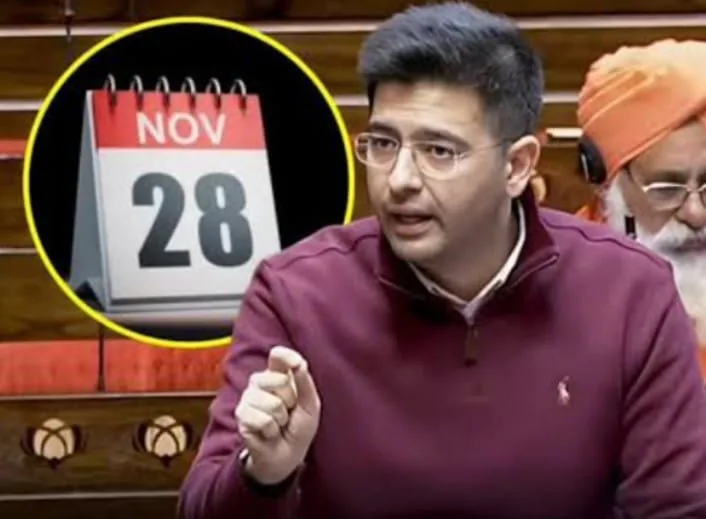
The number of mobile users in India is steadily increasing, and approximately 1.25 billion of them use prepaid connections. Recently, in Parliament, Raghav Chadha raised two significant issues related to this vast user base, making the problems of the telecom sector and the general public a topic of national debate.
What is the whole matter?
Raghav Chadha said in Parliament that millions of prepaid users in the country rely on mobile services for their everyday needs—be it banking alerts, OTPs, or emergency calls. But current telecom regulations and plans are often causing problems rather than convenience.
1. Incoming services stop once the recharge is over
The biggest issue raised was that as soon as a prepaid user's recharge expires, many telecom companies stop incoming calls and SMS.
What problem does this cause?
Banking OTP and important alerts are not received
Emergency calls or messages may be missed
Problems with digital payments and verification
Rural and poor sections are more affected
In this situation, the user is forced to get the recharge done immediately, even if there is no immediate need for it.
2. The 28-day “monthly” plan game
Another major issue is the so-called "monthly plan." Most telecom companies sell 28-day plans as monthly plans.
What is real mathematics?
1 year = 365 days
28 day plan = 13 recharges
That means payment 13 times instead of 12
This simply means that the user has to make an additional recharge every year, which increases the overall cost—and this increase becomes a huge financial burden on millions of customers.
What could be the next action?
After the issue was raised in Parliament, it is now expected that:
The government and the Telecom Regulatory Authority of India should seriously consider this.
Companies had to change the rules to keep incoming services running.
Instead of 28 days, the actual “monthly” plan i.e. 30 days or 31 days plan should be implemented
Why is this a big issue for the general public?
In a country like India, where a large population consists of prepaid users, even small changes have a direct impact on the pockets and convenience of millions of people.
This matter is not just about telecom plans, but is related to the access, convenience and rights of the common citizen in Digital India.
This outcry in Parliament highlights the real problems faced by millions of mobile users. It remains to be seen what action the government and telecom companies take to address these issues—because they directly impact the common man's pocketbook and daily life.