Amid rising tensions in the Middle East and concerns about maritime security, India has received some welcome news. The Indian LPG tanker "Green Sanvi" has successfully sailed through the Strait of Hormuz, which has become extremely sensitive due to the ongoing conflict between Israel, the United States, and Iran. It has become the seventh Indian gas tanker to transit this route during the recent crisis.
The tanker proceeded along a safe route
According to ship tracking platforms, the "Green Sanvi" has currently passed through the Larak-Keshm Channel, which is considered a relatively safe route through this dangerous waterway. The tanker is carrying approximately 58,000 metric tons of LPG, vital to India's energy needs. The ship has its Automatic Identification System (AIS) activated, allowing its movements to be continuously monitored.
Many ships are still stranded
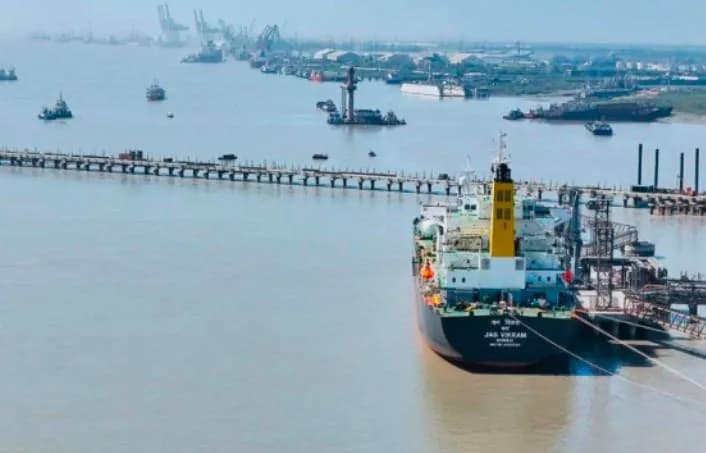
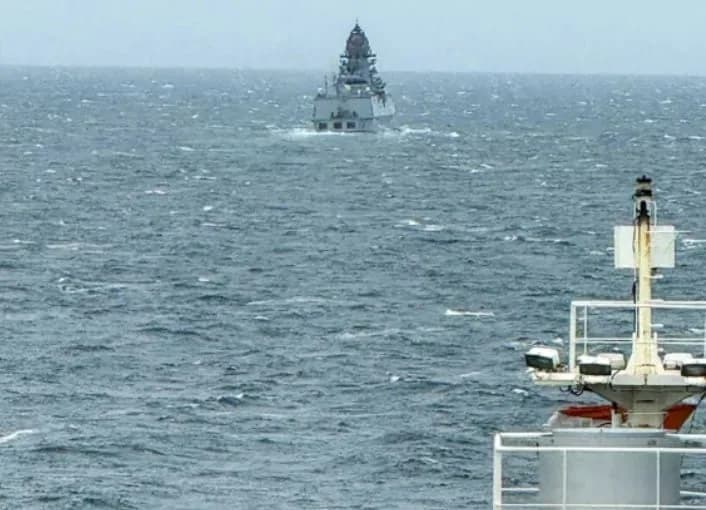
However, the situation has not fully returned to normal. Two Indian tankers, the Jag Vikram and the Green Asha, remain stranded near the Strait of Hormuz. They were previously seen in the vicinity of the Green Sanvi, but have now moved ahead. The Indian Navy and related agencies are working to ensure the safe passage of these ships.
Many tankers have already arrived
Several Indian tankers have previously reached India safely, including 'Shivalik', 'Nanda Devi', 'Jag Vasant', 'BW Tyre', 'BW Elm' and 'Pine Gas'. Recently, 'Jag Vasant' delivered 47,612 metric tonnes of LPG to Kandla Port, while 'Pine Gas' delivered 45,000 metric tonnes of gas to New Mangalore Port.
Many Indian ships are still in danger.
According to the Directorate General of Shipping, approximately 17 Indian vessels are currently stationed in the western part of the Strait of Hormuz. Additionally, some vessels are also in the Gulf of Oman, Gulf of Aden, and Red Sea regions. Many of these vessels belong to the Shipping Corporation of India.
Security of thousands of Indian seafarers a challenge
Amid this crisis, approximately 20,500 Indian seafarers are deployed in the Gulf region. Hundreds of these are serving on Indian-flagged ships. While it's a matter of relief that as of April 3, more than 1,100 seafarers have been safely evacuated, a large number remain in vulnerable areas.
Why is the Strait of Hormuz important?
The Strait of Hormuz is one of the world's most important sea lanes, carrying approximately 20% of global oil and LNG supplies. Iran's closure of the route in February 2026 caused significant turmoil in the global energy market. Oil prices surged above $100 per barrel, and energy crises deepened in many countries.
What does it mean for India?
India relies heavily on imports to meet its energy needs. The safe arrival of tankers like the "Green Saanvi" is a major relief for the country. However, until tensions in the region subside, threats to energy supplies and maritime security will remain.
The safe passage of 'Green Sanvi' is certainly a positive sign, but the Hormuz crisis is not over yet and the eyes of the world, including India, are fixed on this important sea route.